
History and traditions
Origins and lineages of Tai Chi and Qi Gong
A look at the Daoist roots, traditional wellness thinking, and martial foundations behind these movement arts, and how they reached modern practice.
Philosophical roots
From Daoist philosophy to martial practice
Many of the ideas behind Tai Chi and Qi Gong draw on Daoist thought, which emphasizes harmony between the body, breath, and the natural rhythms of the world. Traditional wellness practices from the same period sought to cultivate vitality through posture, breathing, and gentle movement.
Over centuries these ideas merged with martial arts training. Internal styles emphasized relaxed strength, rooted stance, and sensitivity to balance, while regional schools developed their own forms, names, and emphases. Documented records are uneven, so the story is best read as a set of traditions rather than a single fixed origin.
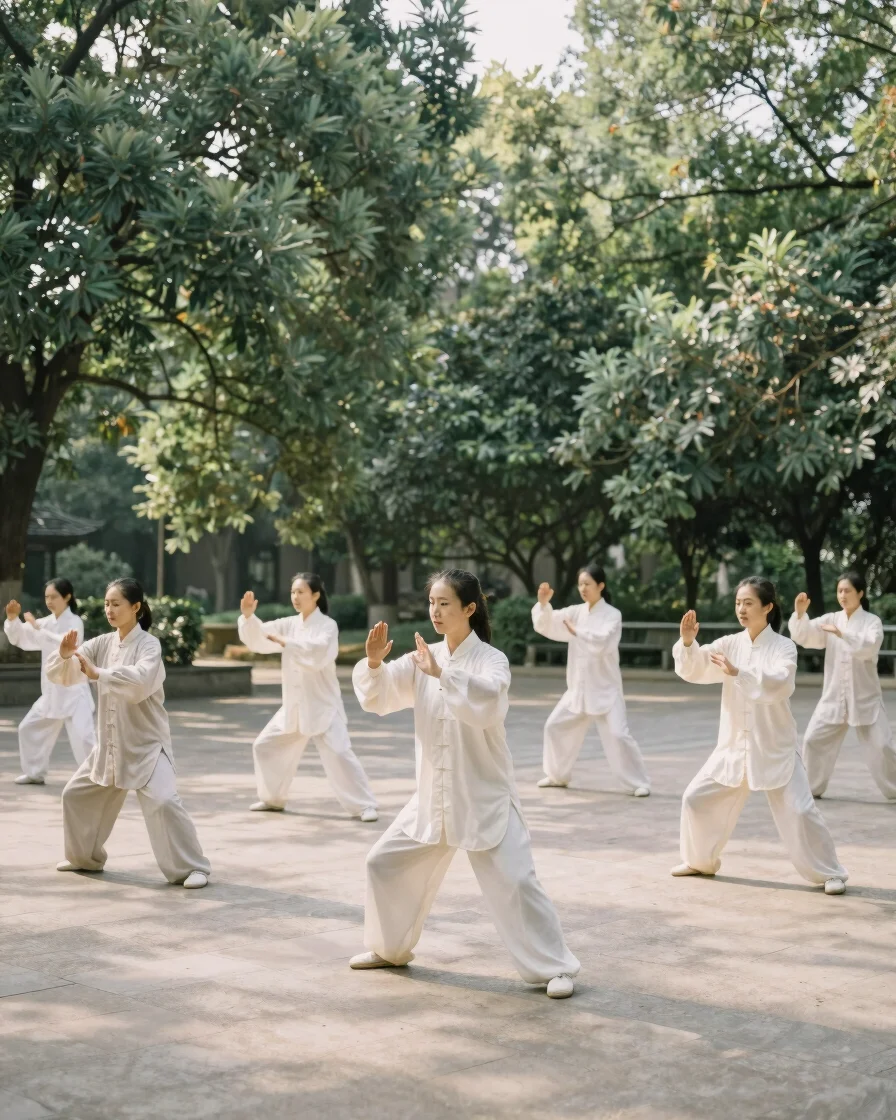
Lineage and transmission
How practice was passed down
Many internal arts were transmitted from teacher to student through direct instruction, often within family or local lineages. This oral tradition shaped how forms were remembered, adapted, and handed on to modern practitioners.
Today, many people encounter these disciplines in general classes and publications. Reading about their history can offer useful context for understanding why the movements are practiced as they are, and it invites respect for the traditions that carried them forward.